
Pelvic Floor Training with Biofeedback
The Process of the Session
1. Brief Consultation
The physical therapist and the patient discuss the results and experiences to date, current symptoms (e.g., difficulty urinating, pressure in the lower abdomen, postpartum recovery, pain), and treatment goals.
2. Sensor Placement
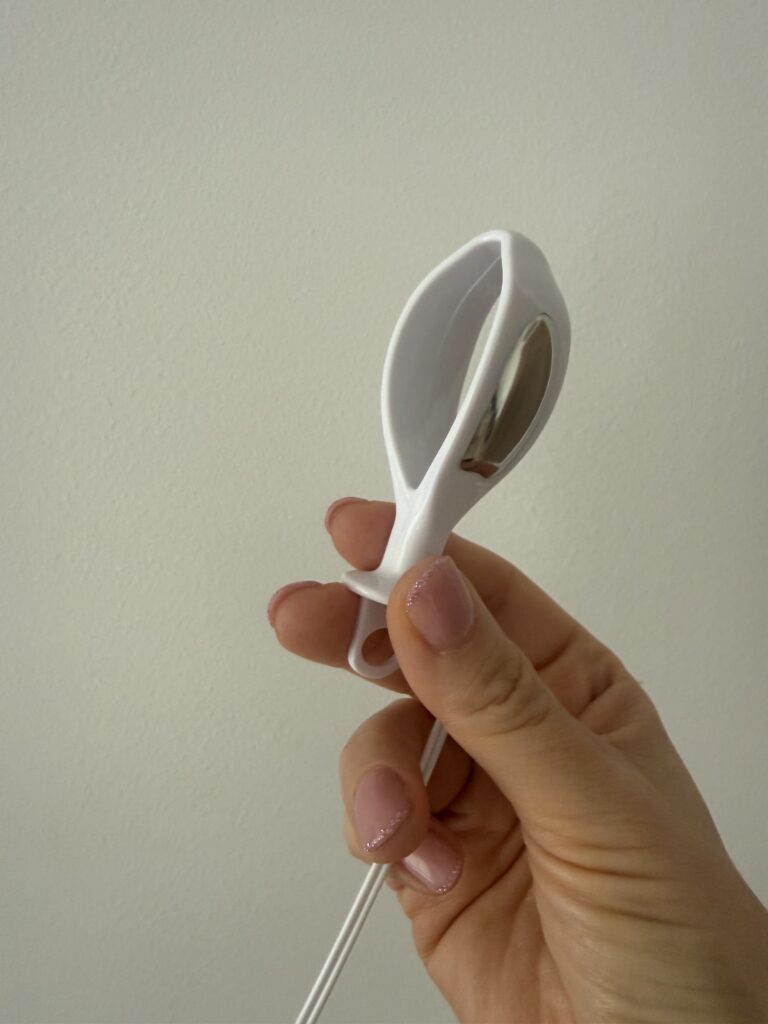
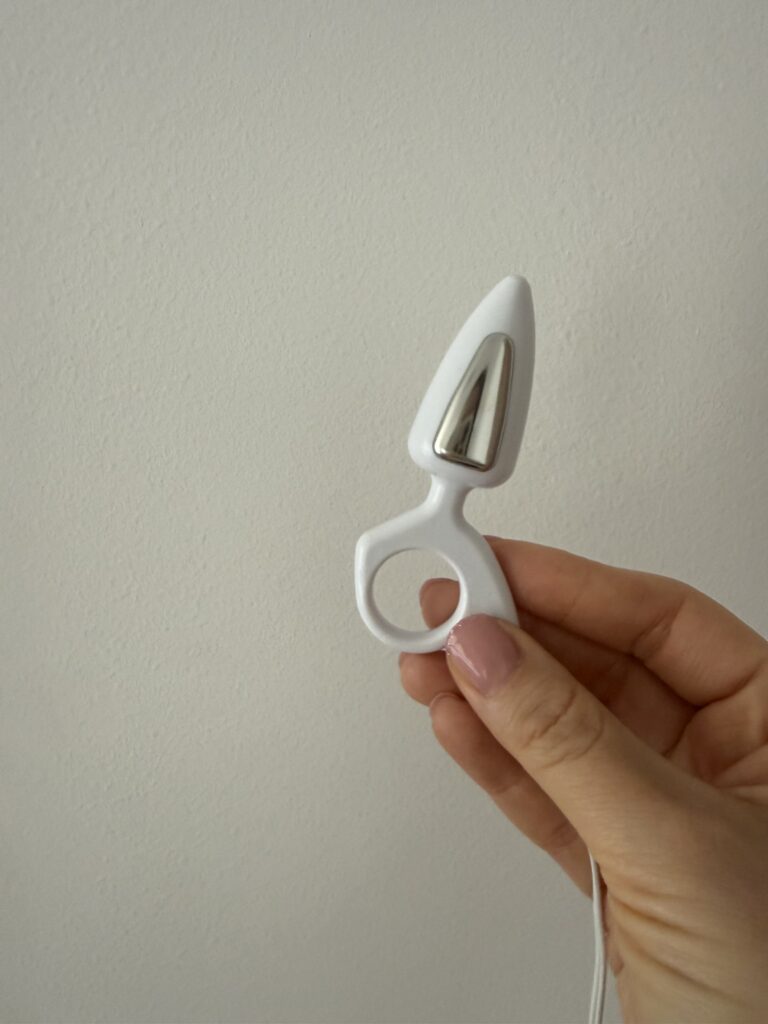
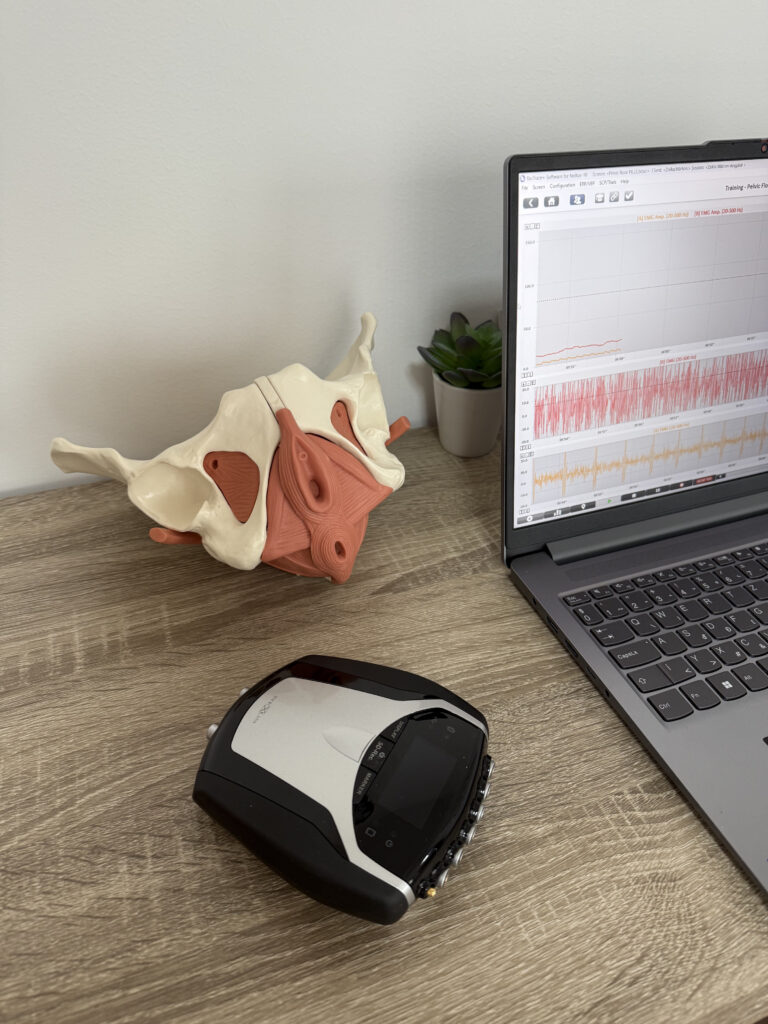
The biofeedback device measures pelvic floor muscle activity using a special sensor (vaginal or rectal probe).
The patient independently inserts her own probe in the restroom, following proper hygiene and disinfection guidelines, using electrode gel. She/he then returns to the treatment room fully dressed.
3. Muscle Activation with Real-Time Feedback
Under the physiotherapist’s guidance, the patient performs various pelvic floor exercises while sitting or lying down.
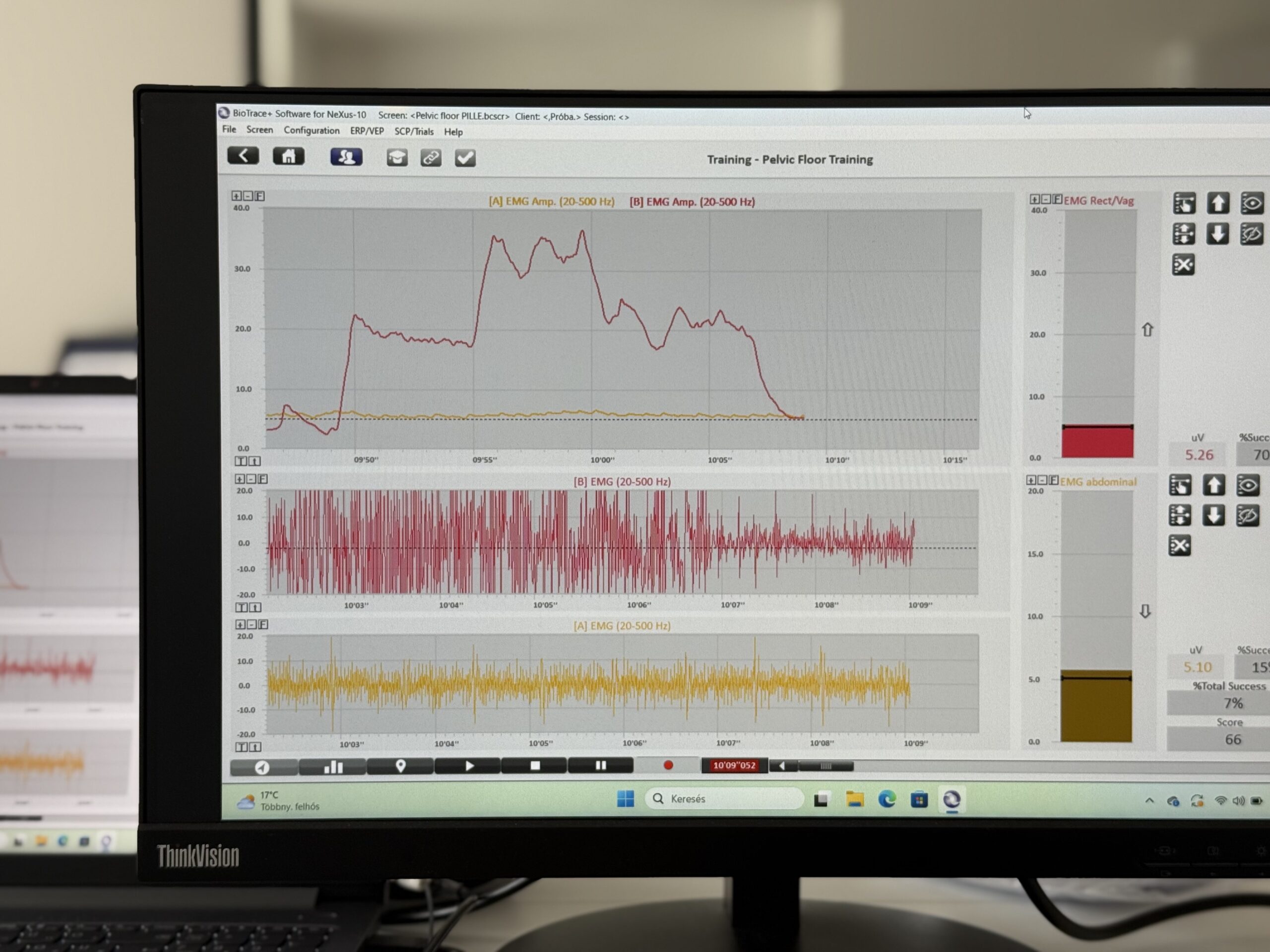
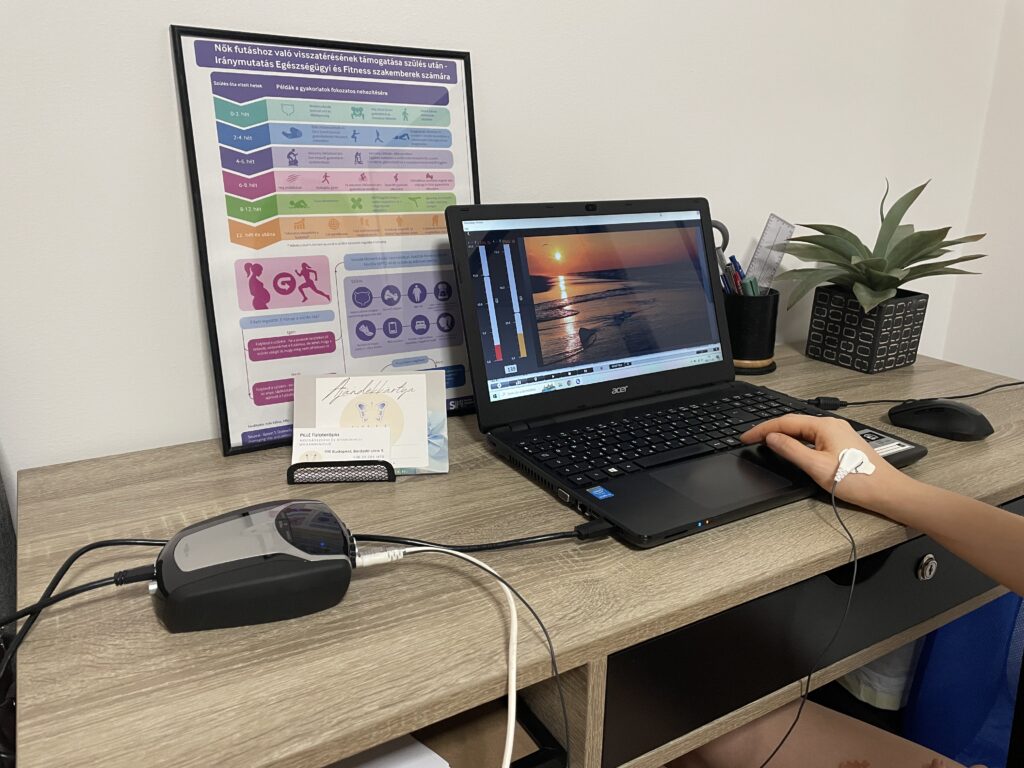
The device provides visual feedback on a screen through graphs and interactive games, displaying real-time muscle activity.
Biofeedback helps to:
● learn proper muscle activation
● recognize excessive tension or weakness
● improve strength and coordination
● enhance relaxation ability
● increase motivation for home practice
4. Personalized Exercise Plan
Based on the measured results, an individualized exercise program is created for home practice.
Pelvic Floor Biofeedback Training is Recommended in the Following Conditions:
● To improve conscious control of pelvic floor muscles
● Urinary incontinence
● Gas or fecal incontinence
● Chronic constipation or difficulty with bowel movements
Chronic Pelvic Pain Syndrome (CPPS) or pelvic discomfort
● Painful or decreased sensation during intercourse
● As part of postpartum recovery
● Before and after pelvic surgery
Pelvic Floor Biofeedback Training is Not Recommended in the Following Cases:
● Anatomical and/or neurological disorders
● After radical surgical procedures
● After radiation therapy
● During the first 12 weeks of pregnancy
Pelvic Physiotherapy May Include:
● Individualized pelvic floor exercise programs
● Pelvic floor training with biofeedback
● Pelvic floor electrotherapy
● Personalized, regular and varied physical activity
● Relaxation techniques, autogenic training, vagus nerve therapy
● Treatment of musculoskeletal complaints with physiotherapy and manual techniques
● Behavioral therapy (bladder training, modification of voiding habits, weight management)
● Lifestyle counseling – recommended dietary and fluid intake adjustments (within dietitian competence)
● Cube pessaries, sports pessaries, medication, or surgical indications (within urogynecologist competence)
Important Information
● Pelvic floor biofeedback training does not replace regular home pelvic floor exercises or general physical activity. Long-term success requires active participation and adherence to lifestyle recommendations.
The biofeedback device may only be operated by a professional who has completed specialized training through the Hungarian Biofeedback and Neurofeedback Academy Scientific Association and has acquired the skills necessary for the safe and professional implementation of pelvic floor biofeedback assessment and training.
Important information:
● Pelvic floor training with biofeedback does not replace regular home pelvic floor exercises and general physical activity. Active participation and following the lifestyle advice given are essential for lasting results.
● The biofeedback device may only be operated by a professional who has learned to carry out pelvic floor biofeedback assessment and training competently and safely, through the training of the Hungarian Biofeedback and Neurofeedback Academy Scientific Association.